Anomaly Detected Anomaly Types Guide
Every reportable object class explained with miss-risk notes for House, Office, and Church.
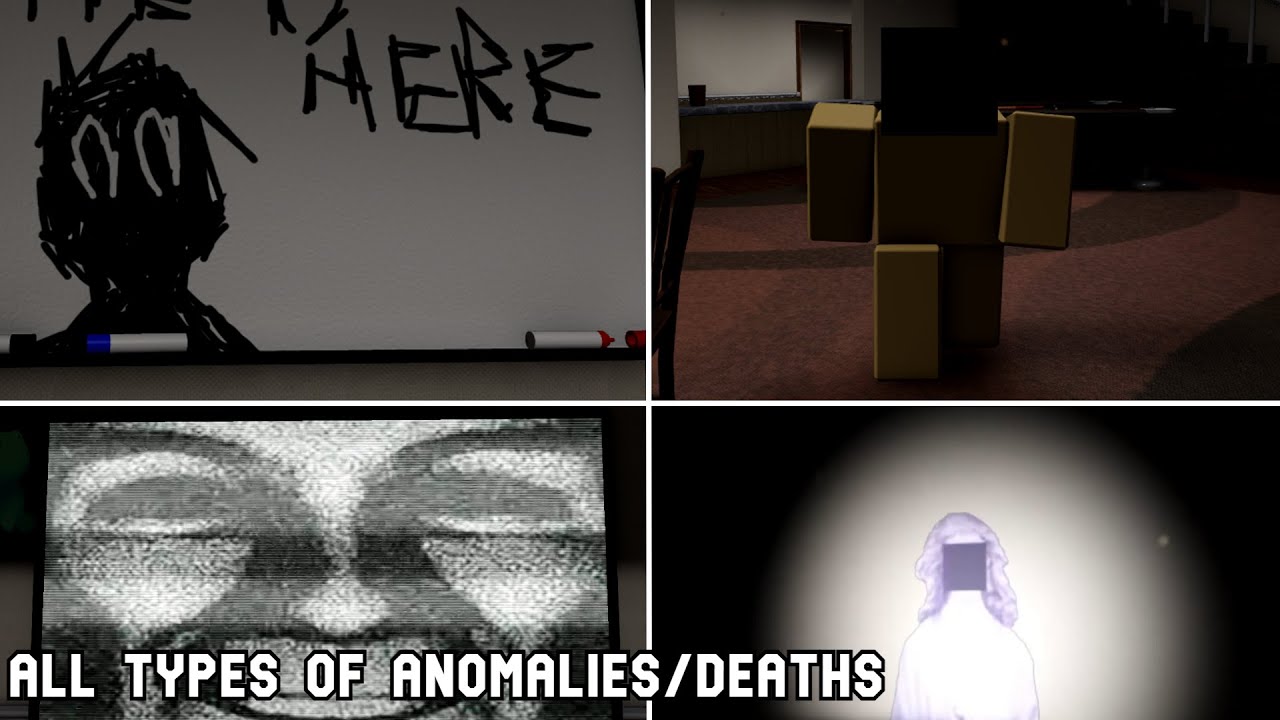
Object classes vs Intruders
Anomaly Detected splits wrongness into tablet categories. This page covers the object and environment classes—Moved Object, Extra Object, Missing Object, Strange Imagery, Strange Light, Distorted Object, and Other. Hostiles live on Intruders and must always interrupt object work.
Learn classes on House (House walkthrough), stress-test them in Office darkness (Office), and survive their volume on Church (Church). Tablet workflow: How to Report Anomalies. Priority ranks: Tier List.
The embedded video shows Office-leaning anomaly and entity examples—use it to calibrate eyes, then study the definitions below.
Moved Object
Definition: A prop that belongs in the baseline now sits in the wrong place or angle.
Miss risk: Medium. Easy to see when large; easy to over-report when you gaslight tiny angles.
Tips: Pick anchors (chair vs table edge, frame vs wall center). On Office chair oceans, choose landmark desks. If the identity is new entirely, consider Extra instead.
Extra Object
Definition: Something exists that should not exist in the room’s baseline—duplicate or impossible clutter.
Miss risk: High for beginners who only watch for motion.
Tips: Count multiples. “Two lamps where one lived” is Extra, not Moved. Church storage rooms love Extra traps.
Missing Object
Definition: An expected baseline prop is gone.
Miss risk: Very high—absence is psychologically hard.
Tips: Inventory shelves on entry. Pause on empty rectangles. Sprint culture on Office is Missing Object’s best friend (your enemy). Call “Missing” explicitly so teammates re-check.
Strange Imagery
Definition: Pictorial surfaces—art, posters, screens, icons—show wrong subjects, faces, or corruption.
Miss risk: High when art already looks dramatic (Church).
Tips: Baseline subjects on lap one. Do not assume intensity equals anomaly. Imagery lead role helps on dense maps.
Strange Light
Definition: Impossible lighting behavior—wrong hue, flicker, presence, or absence.
Miss risk: Medium on House; high on Office.
Tips: Plant feet before judging. Ask if a beam is a teammate flashlight (F). Scripts that fullbright the map remove the lesson and risk bans (Scripts).
Distorted Object
Definition: A known prop with warped shape, stretch, melt, or texture wrongness while remaining “the same object.”
Miss risk: Medium-high—shadows impersonate distortion.
Tips: Stare half a second longer. If location is wrong but shape is fine, prefer Moved. If shape is wrong, prefer Distorted.
Other
Definition: Catch-all when wrongness is clear but no clean bucket fits.
Miss risk: Low mechanically; high socially if overused as a panic button that skips communication.
Tips: Valid under Vague threat when speed matters. Always narrate what you saw so the next loop can reclassify.
Intruder (cross-reference)
Not an object class—listed here so you never forget it exists on the same tablet. Report first. Survival: How to Survive Intruders.
Map modifiers
| Map | Classes that spike pain |
|---|---|
| House | Teaching ground for all; Missing still sneaky on shelves |
| Office | Strange Light, Missing, Distorted-in-shadows |
| Church | Imagery volume + stacked anomalies of any class |
Threat meter interaction
Object classes can raise pressure, but Intruders drive the lethal Evident → Unreportable chain. At Vague, finish Intruder sweeps before debating Moved vs Distorted. Meter etiquette lives in How to Play and Getting Started.
Study plan (one evening)
- Run House naming only Moved / Missing / Extra.
- Second run add Imagery / Light / Distorted.
- Third run allow Other under time pressure.
- Watch how often Intruders interrupt—and obey them.
- Skim Players Hub and Updates if hardmode timing feels harsher than your class speed.
Myths
- “Other is always wrong.” No—Other is a speed tool.
- “Codes fix bad classification.” No verified active codes (Codes).
- “ESP replaces learning classes.” Until the script breaks or the ban lands.
Related links
Master anomaly types and the building stops being noise. Every wrong chair becomes a sentence you can finish on the tablet before morning.
Frequently Asked Questions
Quick answers to the most common questions.
How many anomaly types can I report?
Object and environment classes include Moved, Extra, Missing, Strange Imagery, Strange Light, Distorted, and Other, plus Intruder as the hostile category on the same tablet.
Which object class is easiest to miss?
Missing Object, because absence is easy to overlook—especially while sprinting through dark Office rooms.
When should I pick Other?
When something is clearly wrong but taxonomy would take too long under rising threat. Describe what you saw to the team after submitting.
Is Strange Light more common on Office?
Office darkness makes Strange Light harder to judge and easier to confuse with player flashlights, so miss risk climbs there.
Do Intruders count as anomaly types?
Intruders are the hostile report category and override object work. Use the Intruders page for silhouette and wipe-prevention details.